
The small gestures after the loss of a loved one are not measured by their cost or originality. What distinguishes a gesture that truly touches from a conventional approach is often the timing and the form it takes. This article examines the most helpful gestures after a death, based on what bereaved individuals describe as genuinely useful.
Practical support after a death or words of comfort: what helps the most
Most articles on grief emphasize words of condolence. Feedback from bereaved individuals points in another direction: practical support is valued more than general phrases. Running errands, babysitting, accompanying to a medical appointment, or assisting with administrative tasks are concrete gestures that lighten a brutally disorganized daily life.
Words of comfort are not useless, but they operate in a different register. A sincere two-line note touches more than a long, awkward speech. In contrast, offering to cook a meal or manage a school run addresses an immediate need that words alone cannot fulfill.
| Type of attention | Most suitable moment | Main effect |
|---|---|---|
| Assistance with administrative tasks | First week after the death | Direct logistical relief |
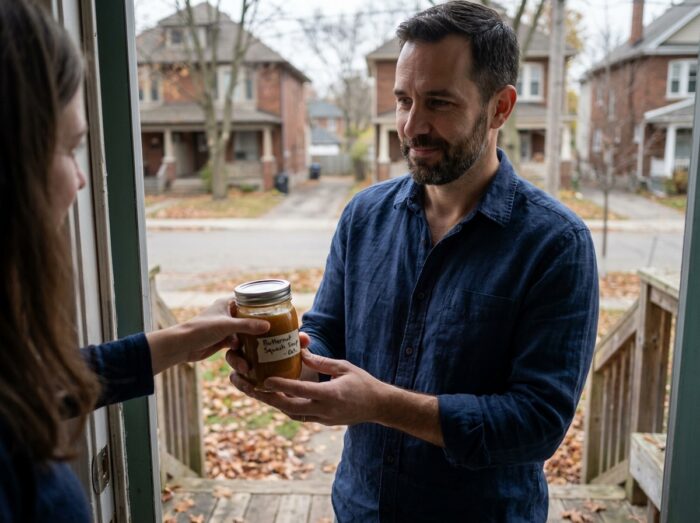
| Prepared meals or groceries | The first two to three weeks | Reduction of daily mental load |
| Childcare | Days around the ceremony | Allows the family to focus on grieving |
| Personalized follow-up message | Several months later, on key dates | Breaks isolation over time |
| Written condolence card | First week | Physical trace of the support received |
This table highlights a clear gap: material gestures act immediately, while emotional support (messages, cards) gains its value when it is sustained over time. The two are not interchangeable.
Writing a thank you card after a death is one of the gestures that the bereaved family will have to carry out themselves, often in the weeks following the ceremony. Receiving a sincere written note facilitates this step by providing a model of simplicity.
Presence over time after the loss of a loved one
Support is heavily focused on the first days following the death. After the ceremony, those around return to their lives. It is precisely at this moment that the isolation of the bereaved person intensifies.
A simple follow-up message several months after the death is seen as particularly helpful. Sensitive dates (anniversary of the deceased, day of death, year-end holidays) are times when a word, even brief, breaks a silence that can become heavy.
The difference between occasional support and real accompaniment lies in regularity. There is no need to see the person every week. A text sent six months later, mentioning the deceased’s name, is often enough to show that the memory endures beyond the family circle.
What late support concretely changes
The grieving period does not follow a predictable calendar. Loved ones who maintain spaced but regular contact allow the bereaved person to talk about the deceased without having to justify their sorrow. This need to name the departed person, to share a memory or an anecdote, remains strong long after the funeral.
- Send a message as the anniversary of the death approaches, mentioning a specific memory related to the deceased
- Offer an outing or a concrete activity rather than a vague “don’t hesitate if you need anything”
- Continue to invite the bereaved person to social events without insisting, but also without stopping
Condolences and symbolic gestures: form matters as much as intention
Flowers remain the most common symbolic gesture after a death. Their impact largely depends on the choice and context. A composition chosen based on the deceased’s tastes touches more than a standard bouquet ordered online without particular thought.
Memorial objects (jewelry containing ashes, named star, planted tree) are increasingly prominent in mourning practices. Their value lies in personalization. A generic object bought in bulk does not carry the same weight as a gesture thought out in relation to the deceased.
Handwritten card or digital message after a death
The handwritten card retains an advantage that digital cannot replace: it can be kept. Many bereaved families reread the cards received months, sometimes years later. The physical trace of a condolence message extends support well beyond the moment it was written.
A text or a message on a messaging app is not to be excluded either. Its strength lies in immediacy: it can arrive within minutes of the announcement of the death, even before a card can be mailed. The two formats complement rather than oppose each other.

Administrative procedures and new funeral regulations
Helping a bereaved loved one with their administrative tasks is among the most concrete gestures. Since the loss of a loved one, the family must simultaneously manage grief and a series of obligations (death declaration, contact with funeral services, insurance, notary).
Starting October 1, 2026, funeral operators will be required to provide a standardized and neutral information notice to each family. This obligation aims to regulate a sector where families, vulnerable in the hours following the death, rarely have the necessary perspective to compare services.
Offering to accompany a bereaved loved one to the meeting with the funeral services, or simply to review the quotes received, constitutes direct help. This type of attention is not spectacular, but it protects the family at a moment when their decision-making capacity is impaired by grief.
The gestures that truly touch after the loss of a loved one share a common point: they respond to a real need rather than a social convention. A cooked dish dropped off without fanfare, a message sent six months after the death, a silent presence during an administrative appointment. What makes the difference is the timeliness of the gesture and the sincerity of the act, not its magnitude.