The certificate of commitment and knowledge, mandatory since October 1, 2022, requires a minimum seven-day waiting period between signing and completing the adoption. This document sets out the species’ physiological, behavioral, and medical needs. Adopting a dog therefore begins with an administrative step that determines the entire household preparation timeline.
Certificate of commitment and legal waiting period before adopting a dog
The certificate is more than a formality. It details the animal’s needs in terms of food, veterinary care, space, and stimulation. By signing, the adopter confirms they understand these obligations and accepts civil liability in the event of neglect.
This seven-day waiting period prevents impulsive adoptions. A shelter will not hand over a dog on the day of your visit. We find that this time allows adopters to make practical arrangements: buying supplies, booking a veterinary appointment, and setting up a sleeping area.
For households with children or another pet, this week also gives everyone time to prepare for the new arrival. Gradually introducing the future dog’s scent (using a piece of fabric provided by the shelter) can reduce stress during the first few days. Browsing the dogs at 4 Pattes d’Amour helps you identify available dogs in advance and focus on those you’d like to meet.
A dog’s individual temperament versus its breed profile

Choosing a companion based solely on breed is a mistake. A Labrador described as “calm and family-friendly” may be highly energetic if its history includes a prolonged lack of stimulation. An individual dog’s temperament matters more than its breed standard.
At shelters, staff assess dogs’ behavior in a range of situations: how they react to other dogs, how well they tolerate handling, and how excited they become in response to external stimuli. These observations are more valuable than a generic description.
Behavioral signs to look for at a shelter
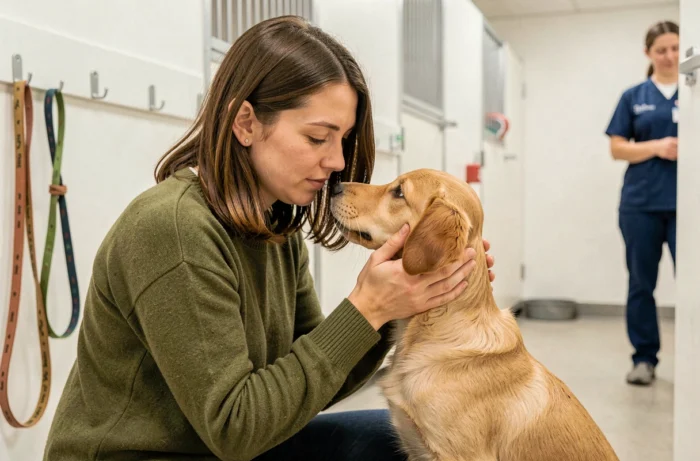
- Body language during the first meeting: a dog that freezes or turns its head away is showing signs of stress. This should be addressed through gradual socialization, not by making a second visit that is even shorter.
- Leash reactivity around other dogs in the shelter corridor: constant pulling or sustained barking suggests that desensitization work may be needed, sometimes with a behavioral trainer.
- The ability to settle in a quiet space after a period of excitement: a dog that calms down within a few minutes shows effective emotional regulation, a key factor for apartment living.
- Willingness to interact with people: a dog that seeks physical contact without jumping up or mouthing has generally had appropriate early socialization.
Ask shelter staff about the circumstances in which the dog arrived (surrender, seizure, or found as a stray) to better understand its reactions. A dog seized for abuse will not respond in the same way as one surrendered after a move.
Choosing a dog to suit your home’s size and lifestyle
A dog’s size is not as strong an indicator of its space requirements as its activity level. A six-kilogram Jack Russell in an apartment without enough walks is far more likely to develop behavioral problems than a Great Dane that is content with two structured walks a day.
The key factor is the amount of daily exercise and stimulation the household can consistently provide. A herding or hunting dog needs one to two hours of physical and mental activity every day, including weekends and holidays.
Living with a dog in an apartment: the practical considerations
Apartment living with a dog requires a consistent schedule of walks. At least three outings a day, including one lasting at least thirty minutes, is the bare minimum. Without this, house-training problems and separation anxiety can develop quickly.
Noise is an often-overlooked factor. A dog that barks when its owner is away can cause problems with the neighbors. Highly vocal breeds (Beagles, Huskies, and Spitz breeds) need specific training to help them cope with being alone, ideally before they move into the home.

Plan for life changes to avoid returning a dog to the shelter
Animal shelters in France are chronically overcrowded. Post-adoption returns account for a significant share of new arrivals, often because of life changes that were not anticipated when choosing a dog.
Before adopting, thinking ahead to where you’ll be in five years can reduce the risk of giving up your dog. A likely move to a smaller home, plans to have a child, or a career change involving frequent travel: these factors matter just as much as the immediate desire for a companion.
- Couples planning to have a child within the next two years should choose a dog whose tolerance of young children has been tested, rather than assumed based on breed.
- Renters should check that their lease allows pets and consider how difficult it might be to find a new home for a large dog if they move.
- People who live alone and work irregular hours should consider whether they can hire a dog sitter or arrange shared care, because a dog left alone for more than eight hours a day will suffer.
Thoughtful adoption is about more than immediate compatibility between a dog and its household. It means taking responsibility for the animal’s entire life, which can exceed ten years depending on its breed and size. The shelter meet-and-greet process (repeat visits, conversations with volunteers, and questions about the dog’s behavioral history) remains the best way to turn good intentions into a lasting adoption.