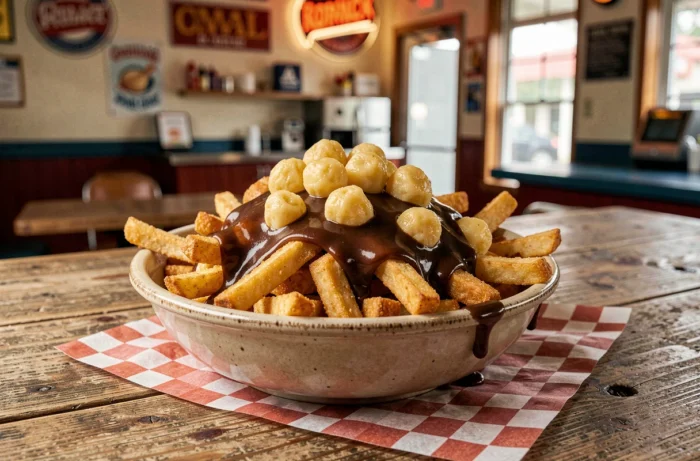
Arriving in Montreal in the middle of winter and ordering poutine at two in the morning from a 24-hour counter is a rite of passage. This first contact with Canadian cuisine sets the tone: generous portions, bold flavors, and a direct link between the climate, the terroir, and the plate.
From Quebec to the Maritime provinces, through the West and Indigenous traditions, local specialties tell a story much larger than fries smothered in gravy.
Wild Blueberry from Quebec: a product that shapes local cuisine
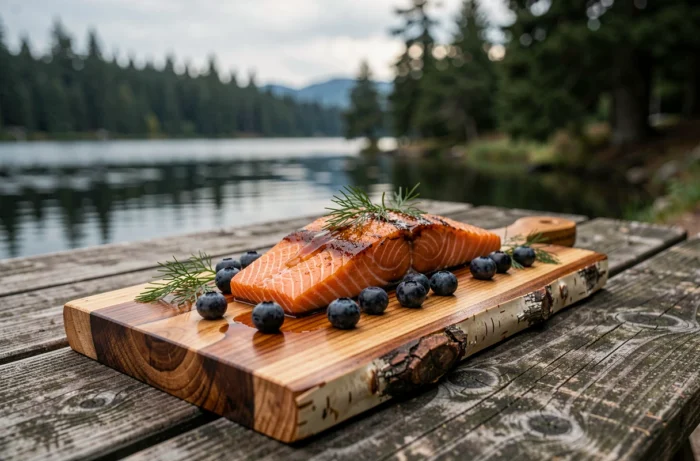
When talking about Canadian specialties, berries are rarely mentioned. The wild blueberry (lowbush blueberry), harvested mainly in Quebec and the Atlantic provinces, deserves attention.
Unlike cultivated blueberries, the wild variety grows in fields managed under a two-year production cycle. The berry is smaller, more concentrated in flavor, and its taste ranges from a bold acidity to a subtle sweetness. It can be found in pies, artisanal jams, sauces for game, and even in some local craft beers.
What distinguishes this product is its territorial anchoring. In Lac-Saint-Jean, the wild blueberry is part of the food landscape just like cheese curds are elsewhere in Quebec. When exploring typical Canadian food, this berry illustrates how a simple ingredient structures an entire regional identity.
Poutine, Tourtière, Pâté Chinois: What Really Connects Them
These three iconic dishes from Quebec share a common point that “top 10” lists rarely mention: they were born out of a logic of winter subsistence. Economical ingredients, quick preparation, and a caloric result suited for physically demanding days in temperatures below twenty degrees.
Poutine Beyond the Cliché
Fries, cheese curds (the famous “squeak squeak” under the teeth), brown gravy. The base is simple. What varies from one restaurant to another is the quality of the cheese curds: they must be fresh from the day to maintain their elastic texture. Cheese from the day before loses this distinctive character. In Montreal, some counters receive their delivery twice a day to ensure this freshness.
Tourtière by Region
The tourtière from Lac-Saint-Jean and that from the rest of Quebec are two different dishes. The “Lac” version is a deep pie filled with mixed meats (often pork, veal, and game) and potatoes, slowly cooked for several hours. The more common version resembles a meat pie, thinner and quicker to prepare.
Ordering a tourtière without specifying the version often leads to a surprise, especially for a visitor expecting a standardized format.
Pâté Chinois: A Canadian Shepherd’s Pie
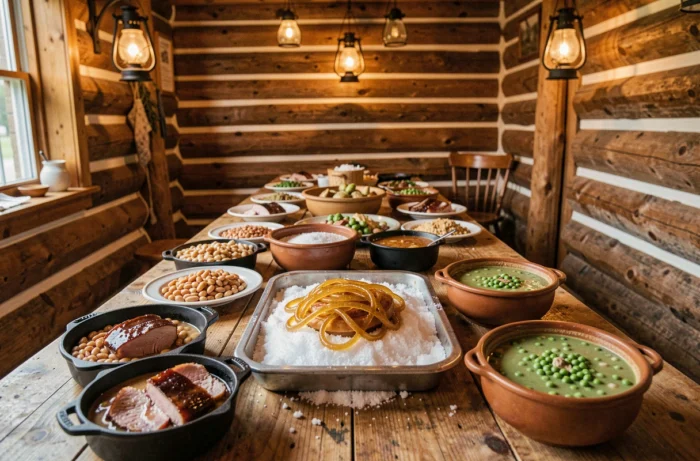
Steak, corn, potatoes, in that order, from bottom to top. Pâté chinois is a family dish that almost every Quebec household prepares in its own way. Its name has no connection to China: it is said to come from French-Canadian workers who worked on the railroads, in camps where this type of nourishing dish was served.
Canadian Sweet Specialties: Maple Syrup as a Common Thread
Maple syrup is not just a condiment in Canada. It structures an entire part of traditional Quebec pastries and desserts.
- The pouding chômeur: a moist cake that cooks directly in hot syrup (maple or brown sugar). The top remains tender while the bottom bathes in a caramelized sauce. Its name refers to the economic crisis of the 1930s when expensive ingredients were out of reach.
- The sugar pie: a filling made from brown sugar or maple syrup poured into a shortcrust pastry. The final texture is somewhere between fudgy and creamy, depending on family recipes.
- Maple taffy on snow: boiled maple syrup poured directly onto packed snow, where it hardens into a sort of soft candy. It is rolled onto a stick. This tradition is inseparable from the sugar season in spring.
Canadian Indigenous Cuisine: Beyond Bannock
Bannock, this flatbread cooked in a pan or oven, remains the most well-known Indigenous dish outside of communities. The culinary reality of First Nations, Métis, and Inuit is much broader, and it is undergoing transformation.
A report from the Council of Canadian Academies highlights that Indigenous food sovereignty depends on support for traditional knowledge and its real integration into resource management decisions. Tensions around fishing rights and access restrictions related to certain protected areas remain a concrete issue.
In Western Canada, Indigenous initiatives are working to restore salmon and sturgeon populations, combining cultural practices, intergenerational transmission, and ecosystem restoration. These efforts are not anecdotal: they redefine the link between food, territory, and identity.
For a visitor, tasting a game dish prepared using traditional methods or discovering local herbs and berries in a restaurant run by an Indigenous chef provides access to a dimension of Canadian gastronomy that classic tourist circuits largely overlook.
Atlantic Coast and Smoked Meat: Two Other Pillars of Canadian Cuisine
The Maritime provinces (New Brunswick, Nova Scotia, Prince Edward Island, Newfoundland) place lobster and seafood at the center of their cuisine. The lobster roll, a brioche bun filled with simply seasoned fresh lobster, is a seaside dish enjoyed with feet in the sand or on a dock.
In Montreal, smoked meat holds a special place. This smoked and spiced beef, served in thick slices on rye bread, differs from New York pastrami by its smoking and specific seasoning. The result is more peppery, more meaty. A few historic addresses on Saint-Laurent Boulevard have been preserving the recipe for decades.
The culinary diversity of Canada is not just a checklist of dishes. It reflects climates, migrations, economic constraints, and regional know-how that continue to evolve. Asking the server where the food comes from, tasting an unfamiliar dish on the menu: this is often where true discovery begins.