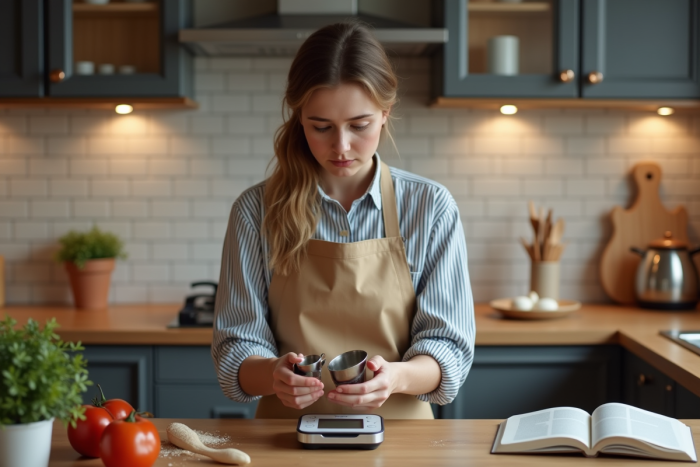
15 milliliters on one side, 17.7 milliliters on the other: the French tablespoon and the English tablespoon are not universal. Recipes from elsewhere multiply references to measurements that leave people puzzled, especially when the family measuring cup doesn’t match up.
Spoons, cups, glasses: each country, each household cultivates its own benchmarks. For the younger ones, the terrain quickly becomes slippery. The indications contradict each other, conversions pile up, and motivation wanes. It’s hard to find one’s way without tools designed for them, and that’s where utensils made for children come into play.
Why measurement units complicate life for budding chefs
In the kitchen, it’s impossible to escape measurement units. Yet, they create confusion from the very first recipe. On the table, a measuring cup displays centiliters, but the recipe calls for grams. Switching from liquids to solids quickly turns into an obstacle course, especially for those discovering culinary gestures.
The conversion between cl to grams confuses more than one apprentice. Milk, flour, sugar: each ingredient obeys its own density. The same measurement yields different results. Many then seek online resources, like the famous page “Understanding how to convert cl to grams of milk for your recipes – Les Recettes Légères de Chrissy,” proving a need for clarity, to untangle culinary jargon.
Between recipes passed down from generation to generation and discoveries on the Internet, benchmarks become even more blurred. A cake sometimes requires cups, sometimes centiliters or grams. Children find themselves juggling instruments and conversion charts. This technical ballet, far from simplifying learning, tends to hinder initiative and creativity.
The vocabulary of measurement units in cooking is unforgiving: milliliters, centiliters, grams… Without a common instruction manual, families struggle to convey the rigor of measuring. When the equipment is not suitable, discouragement quickly creeps into the workshop.
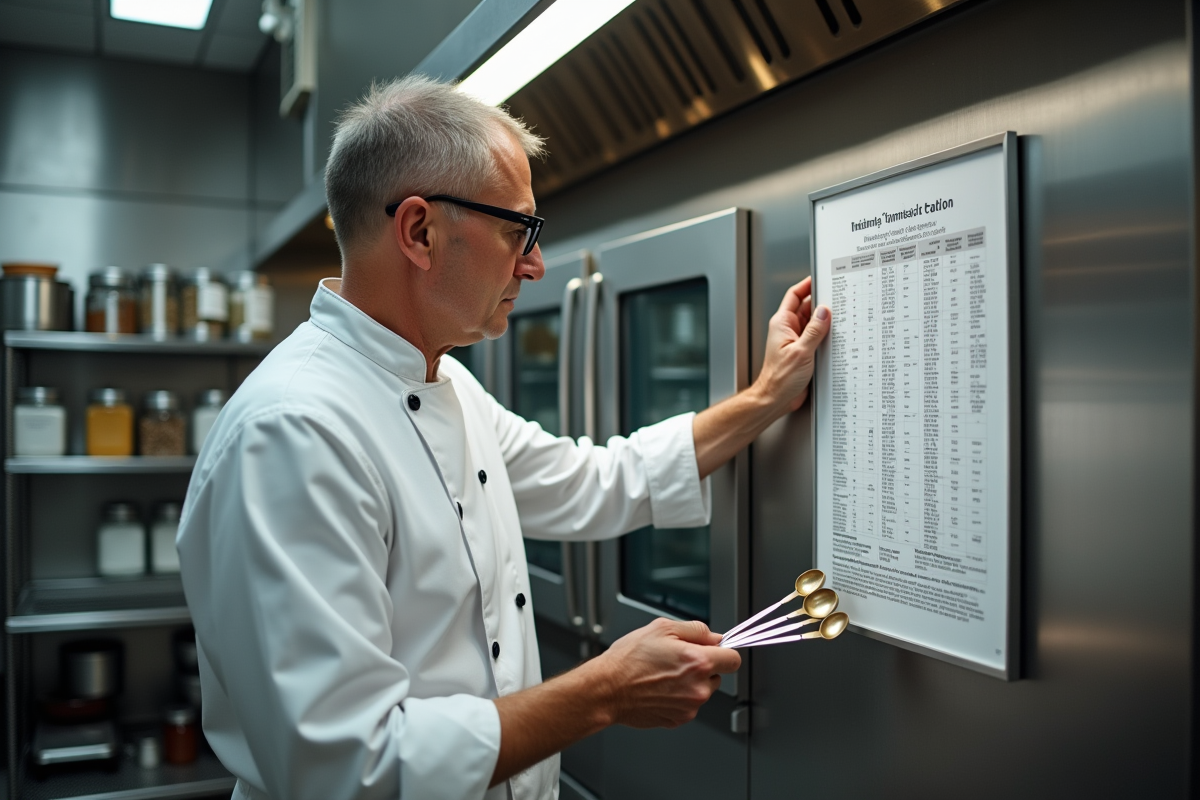
Fun and suitable utensils to transform children’s culinary learning
Faced with the reality of the gesture, theory is no longer enough. Traditional utensils, designed for adults, leave children on the sidelines. Now, a whole generation of tools designed for children’s cooking is changing the game. Imagine a measuring cup marked in centiliters and milliliters, decorated with fun characters, a set of brightly colored measuring cups, or a complete kit presented in a box: this is how to make measurement rhyme with pleasure.
Thanks to these kitchen utensils, measuring becomes a natural gesture. Children quickly learn to distinguish grams and milliliters, handling the measuring tools without apprehension. Practice takes precedence over theory, hands-on experience sets in, and mistakes are no longer a hindrance but a constructive step.
Towards more autonomy and enjoyment
Here’s what these adapted tools concretely bring:
- Increased precision thanks to visual markers designed for their age
- Development of autonomy: the child follows the recipe from their cookbook and gains confidence, without needing constant verification
- Playful dimension amplified by the variety of shapes and color palette
Thanks to this new approach to children’s cooking, pedagogy enters the kitchen. The kits or boxes, available right from the purchase of the first cookbook, finally put instruments designed for them within reach, at affordable prices. Children, active participants in their recipe, tame the measurement units without getting lost in conversions. Gone is the headache of unsuitable equipment: welcome to a practical, educational, and joyful cooking experience. And what if the next great chef emerged precisely thanks to a simple colorful cup?