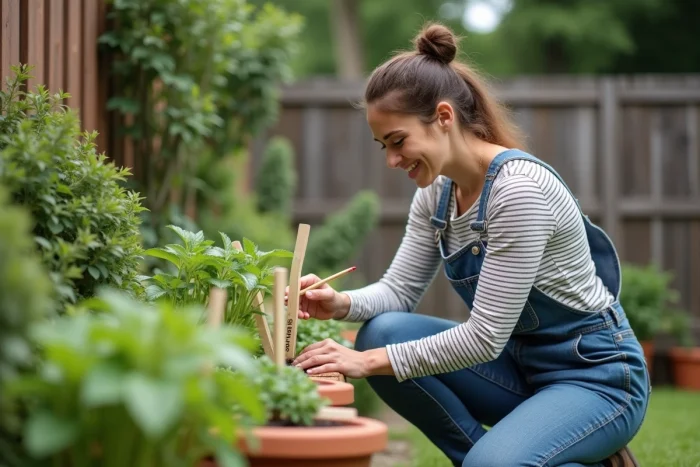
A garden name is not just a label: it influences perception, use, and even the evolution of the space. Local traditions sometimes impose fixed names, while some families pass down secret or symbolic names from generation to generation. Enthusiasts tear their hair out at the difficulty of reconciling originality, coherence, and a sense of belonging. Yet, a simple word can transform an ordinary patch of greenery into a unique territory, rich with stories and projects.
Why the name of your garden influences its atmosphere and style
The garden name plays a crucial role. It is not a checkbox to tick off thoughtlessly, but rather a choice that asserts the personality of your outdoor space. Where a small garden remains off the administrative radar, giving a name to your piece of land becomes an identity gesture. This unique word initiates a dialogue with those who step foot in it, family, friends, or a landscaper. The naming facilitates communication, brings clarity to your decisions, and lays the foundation for your project.
Naming is already a way to guide the layout. If your garden is called “Cour des Senteurs,” the path of aromatic plants naturally imposes itself. If you call it “Refuge du Hêtre,” it’s impossible to overlook the central tree and give it a place of honor. Every detail changes: the chosen furniture, the soft lighting, the location of the bench… Each of these elements comes together around this keyword, ultimately altering routines and habits throughout the seasons.
For those seeking concrete ideas or even feedback, the garden name on Une Fleur Un Jardin is full of ideas from the field and advice directly inspired by passionate gardeners.
What sources of inspiration can help you imagine a name that reflects you?
The quest for the perfect name for your small garden is neither random nor easy. Several avenues can help define a strong identity for your space. First, looking at the structure of your layout helps kick off the reflection:
- If the space offers distinct zones (a reading nook under a tree, a flower bed, a mini vegetable garden), think of names that reflect the richness of uses or capture the specific atmosphere of each part.
Inspiration can also be found in the garden’s plant diversity. Sometimes, a single majestic tree or an explosion of colors is enough to inspire the future name. The history of the land, a memorable memory, or a striking detail are also fantastic springboards:
- Paved paths, a barely visible fountain, a discreet bench in the shade: sometimes it only takes an unexpected detail to find the name that will naturally impose itself.
Tools and tips to refine your choice
Here are some resources that can facilitate the naming process:
- Try a garden style test to discover which atmosphere suits you best, from the bucolic corner to the minimalist setting, through the fragrant garden.
- Use a graphic design software to simulate the layout and connect each atmosphere to a distinct name.
This back-and-forth between inspiration and experience makes each garden name unique and builds a coherence that reflects throughout the space. The concrete examples shared on specialized sites nourish this lively process.

Concrete examples and tips to personalize every corner of your small garden
Giving a name to your small garden involves structuring the space with finesse. Dividing it into clear zones, a shaded reading nook, a paved terrace, a flowering bed, or an elevated mini vegetable garden adds depth and encourages tailored names for each corner. Even in less than 50 m², each square meter stands out as soon as it has a function and a name that fits it.
- Garden labels personalize flower beds and plants: why not call the lavender path “aroma trail” or rename the strawberry patch “gourmand’s corner”?
- Introducing levels (walls, steps, raised beds) changes the perspective and encourages the invention of names suited to each volume.
- By varying furniture and lighting, the atmosphere settles: a bench under the wisteria becomes “the poetic shelter,” lighting that highlights a century-old tree draws all eyes.
A balanced plant palette changes the game: favor evergreens for a structuring decor, climbers for natural separations, or local species to promote biodiversity. Adding a strategically placed mirror expands the view, and mobile planters bring dynamism to the whole. Even synthetic grass gains character when paired with living plants or flowering beds.
On a balcony or a terrace, adjust the name and materials to the surface: the terrace is often an extension of the open-air living room; the balcony reinvents the hanging garden with clever pots and foldable furniture. Each of these choices shapes your experience, and the chosen name captures the spirit of the place.
In the end, naming your garden is about infusing it with a story to live every day. Over the seasons, this name enriches, evolves, and invites those who cross the threshold into an adventure to be told, year after year.