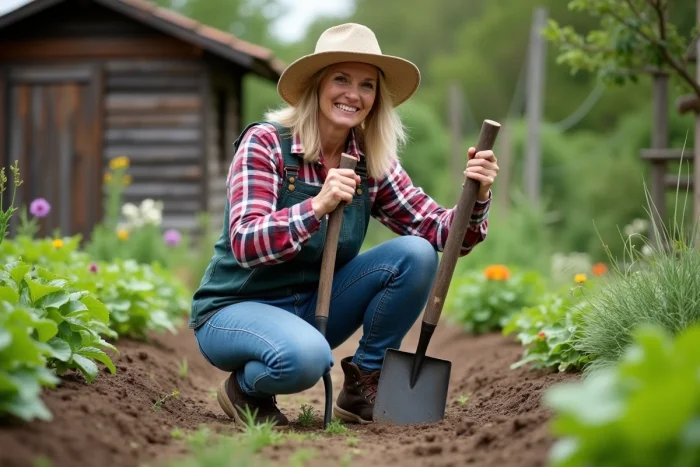
They share the same shelf in garden center aisles, but in practice, the hoe and the stirrup hoe are not interchangeable. In France, the hoe and the stirrup hoe are often confused despite their distinct functions. The regulations on gardening tools do not mention any obligation to possess one or the other, but some market gardeners prefer the stirrup hoe for fine weeding, while the hoe remains favored for heavy soils and more vigorous work.
Learning the specific uses of each tool is a necessary step for any beginner gardener looking to optimize their actions and avoid common mistakes. The choice of tools directly influences the success of initial crops and the preservation of the soil.
Hoe and stirrup hoe: two essential tools for beginner gardeners
In the world of hand gardening tools, there are two companions that no one ignores for long: the hoe and the stirrup hoe. These tools, far from being mere accessories, are essential partners for getting hands in the soil, weeding, or aerating the first vegetable plots. The hoe, recognizable by its flat and sharp blade, is the one you grab to weed and hoe: it breaks up the soil, uproots weeds, makes the earth welcoming, ready to receive seeds. It is used to prepare the ground, bury plant residues, and give the soil the texture it requires.
The stirrup hoe, on the other hand, plays the versatility card. On one side, the blade (a flat blade) for aerating or hoeing, on the other, the tongue (pointed blade) or, depending on the models, a small fork, perfect for making furrows, breaking crusts, or tackling tough roots. It can be found in small family gardens as well as in flower beds or public spaces, as it excels at working close to young plants, where the hoe dares not venture. Maneuverable and precise, it complements the hoe by accessing tight corners and delicate soils.
For those looking to understand the difference between hoe and stirrup hoe, keep in mind: the hoe deals with large areas, quick weeding, and well-cleared plots. The stirrup hoe adapts to all situations: scratching, digging, aerating, hilling, making holes, incorporating compost, dividing bulbs, or even working in containers on a balcony. Experienced gardeners praise the stirrup hoe’s flexibility, which sometimes replaces the rake or the weeder, while infiltrating where other tools give up. Having these two tools at hand ensures a solid foundation to start your vegetable garden with confidence.
What are the concrete differences between hoe and stirrup hoe in vegetable garden maintenance?
From the very first actions, the distinction becomes clear. The hoe comes into play to hoe, weed, or break the surface of the soil. Its blade cuts, dislodges, and extracts surface weeds, preventing them from establishing deep roots. On slightly dry soil, the hoe breaks up clumps and refines the bed before sowing. Used flat, it proves formidable for quick weeding over wide strips or around rows of vegetables, reducing fatigue and increasing efficiency on open surfaces.
The stirrup hoe, on the other hand, unleashes its full potential where plants are close together, in corners or dense flower beds. Its design, with two distinct ends, flat blade and pointed tongue or fork, offers a true diversity of uses: scratching the soil, making furrows, digging holes for sowing, aerating the soil between young shoots, hilling potatoes, incorporating compost, or tackling deep roots. The blade is used to loosen and hill, while the tongue extracts clingy weeds or breaks hard crusts. The fork, for its part, separates clumps without damaging fine roots.
Here, clearly, are the specific uses of each tool:
- Hoe: hoeing, weeding, surface weeding, refining the soil.
- Stirrup hoe: scratching, digging, aerating, making furrows, hilling, mixing compost, extracting deep roots.
On the surface, the hoe reigns. But as soon as the task requires precision or adaptation, the stirrup hoe takes over. Knowing how to choose between the two gives each action its effectiveness while respecting the soil structure and the fragility of young plants.
Practical tips for choosing and using these tools daily
The choice of hand gardening tool starts with the handle. Ash wood remains a safe bet: it absorbs vibrations, limits blisters, and ensures a reliable grip, even when it rains. Handles made from composite materials are lighter but rarely provide the same feel. A good tool is, above all, a balanced tool, neither too heavy nor too light, that allows for long, effortless work.
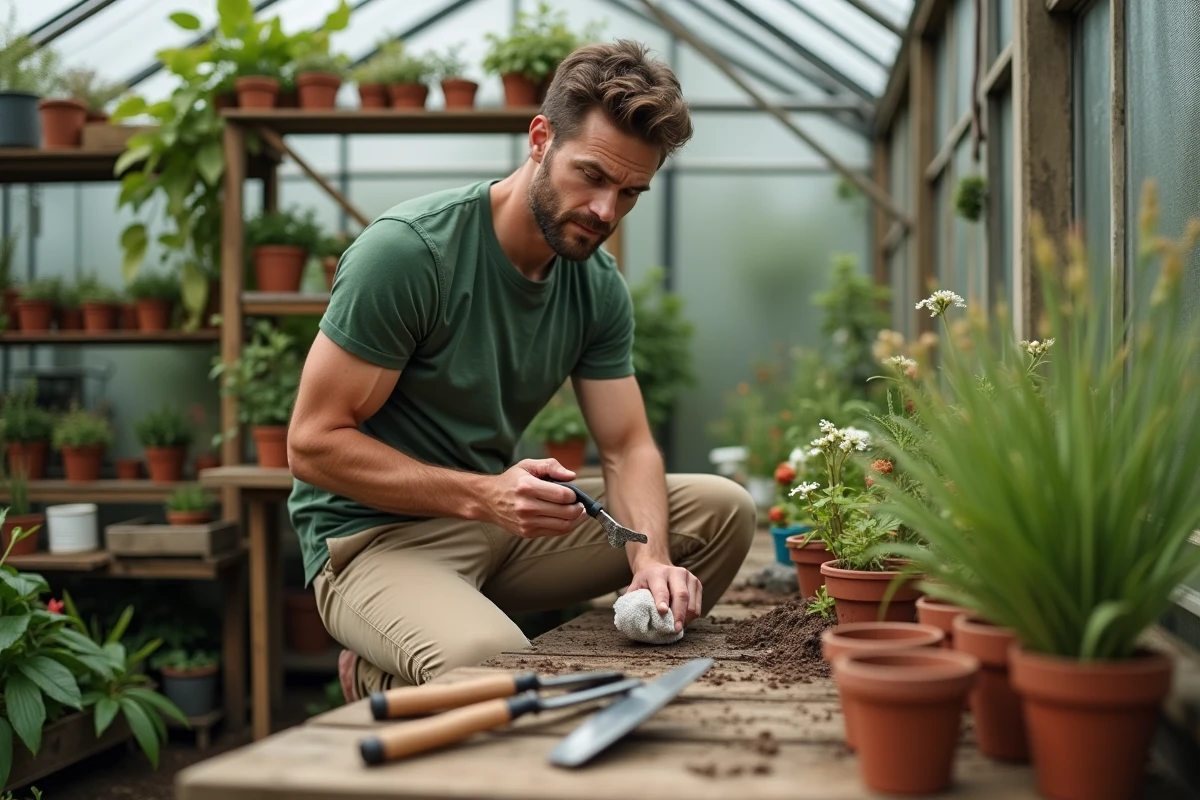
The stirrup hoe draws attention with its double head: one blade for hoeing or hilling, and one tongue for tracing, aerating, and extracting the deepest roots. Some models are equipped with a two-pronged fork, ideal for aerating the soil without turning it over harshly. For container or pot work, a short handle ensures precision; for in-ground vegetable gardens, a long handle offers more reach and protects the back.
The hoe, with its wide flat blade, is mainly chosen based on width and sharpness. For broad weeding, opt for a large blade; for navigating tight rows, prefer a narrower version. Regular maintenance of the blade, sharpening after use, and the hoe will last for years, even on heavy or stony soil.
The stirrup hoe, inherited from Antiquity (from the Latin circumfodere), goes by several names depending on the region: sarclette, piochon, rayonnoir, houette… Versatile, maneuverable, precise, it has its place in all configurations, from urban vegetable plots to large market gardens, with costs ranging from 2 to 30 euros.
Between the hoe and the stirrup hoe, the beginner gardener builds their references, learns to read the soil, and anticipates the needs of crops. Two tools, two temperaments: one for strength and speed, the other for finesse and adaptation. Choosing is already gardening. There’s nothing like getting hands-on to grow the first successes of the vegetable garden.